
Splices and repairs
An open splice needs the seam condition evaluated and a compatible repair detail. Preparation, adhesive or primer requirements and the selected flashing materials come from the system, rather than a universal patch method.
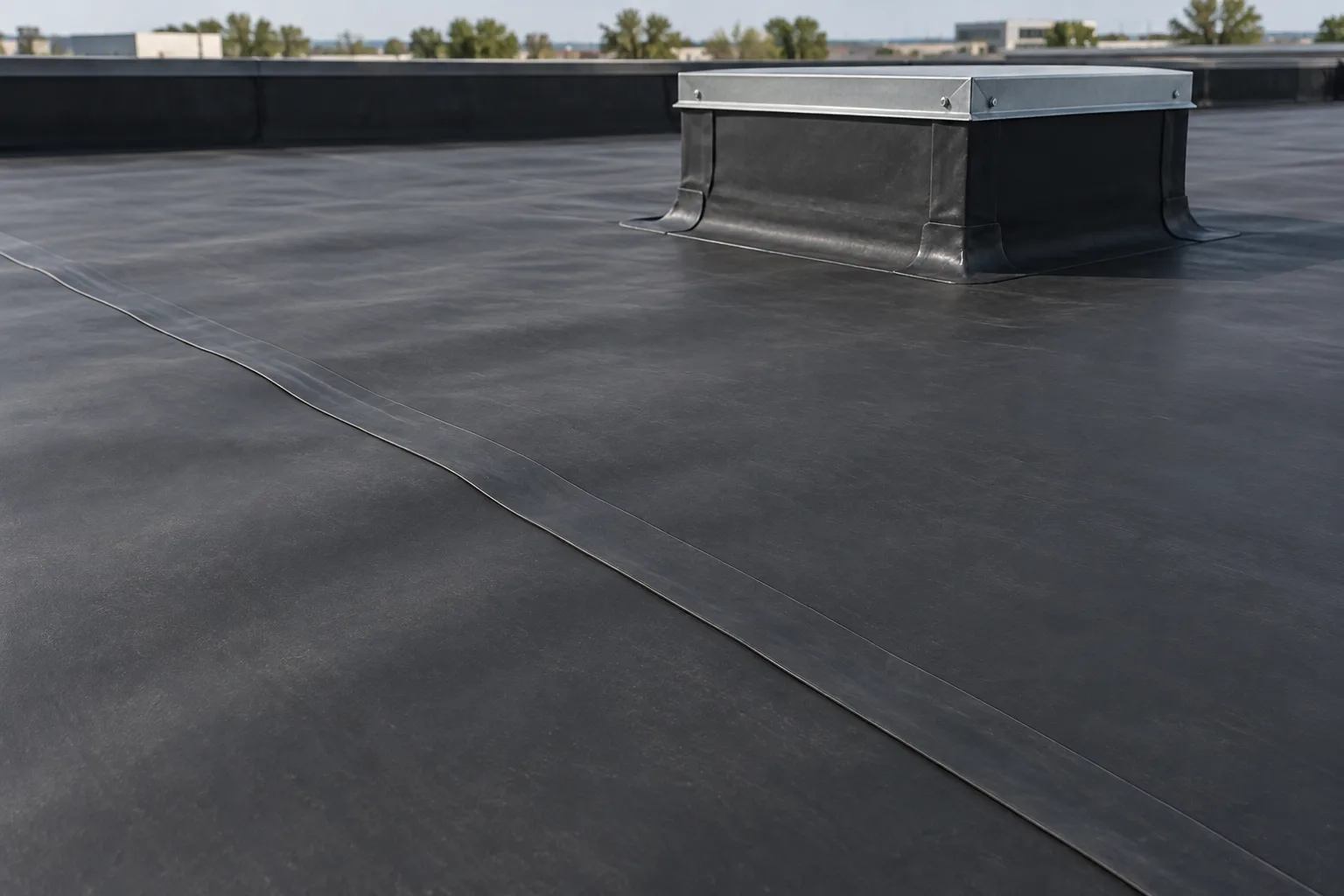
EPDM is a thermoset rubber roof membrane. Its seams commonly use system-specific tapes and adhesives, which is an important distinction from a heat-welded thermoplastic membrane.
A leak repair needs compatible materials and a surface that can be prepared correctly. The membrane around the defect, its attachment and the insulation below it determine how much work is useful.
Discuss an EPDM roof concern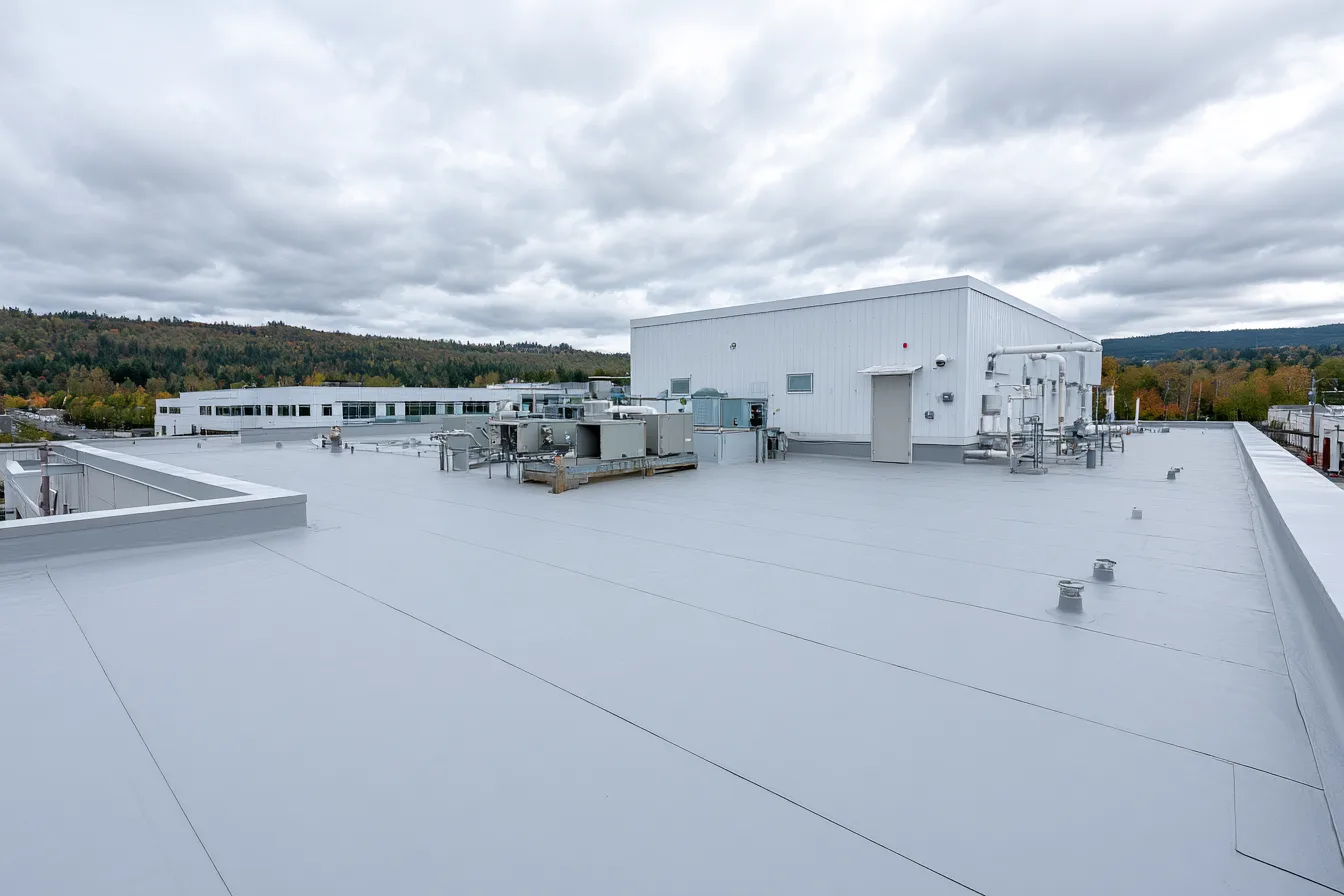
An open splice needs the seam condition evaluated and a compatible repair detail. Preparation, adhesive or primer requirements and the selected flashing materials come from the system, rather than a universal patch method.
Pipes and equipment curbs interrupt the rubber covering. Their transitions need enough sound surrounding material to reconnect the water barrier without leaving an exposed edge or unsupported joint.
The inspection considers seam condition, attachment and possible moisture below the surface. A dry-looking field does not establish dry insulation.
Localized seam or flashing repairs fit a serviceable assembly. Widespread deterioration or wet underlying material can make a larger replacement scope the better fit.
Roof access routes and equipment service can stress the same details repeatedly. The work plan considers those interfaces alongside the membrane.
EPDM and TPO use different seam systems. EPDM repairs need the compatible materials and methods for that rubber assembly.
No. Appearance alone does not establish the material. Correct identification comes before repair selection.
Yes, if the membrane condition, compatible materials and underlying layers support a sound local repair. Age alone does not decide the scope.
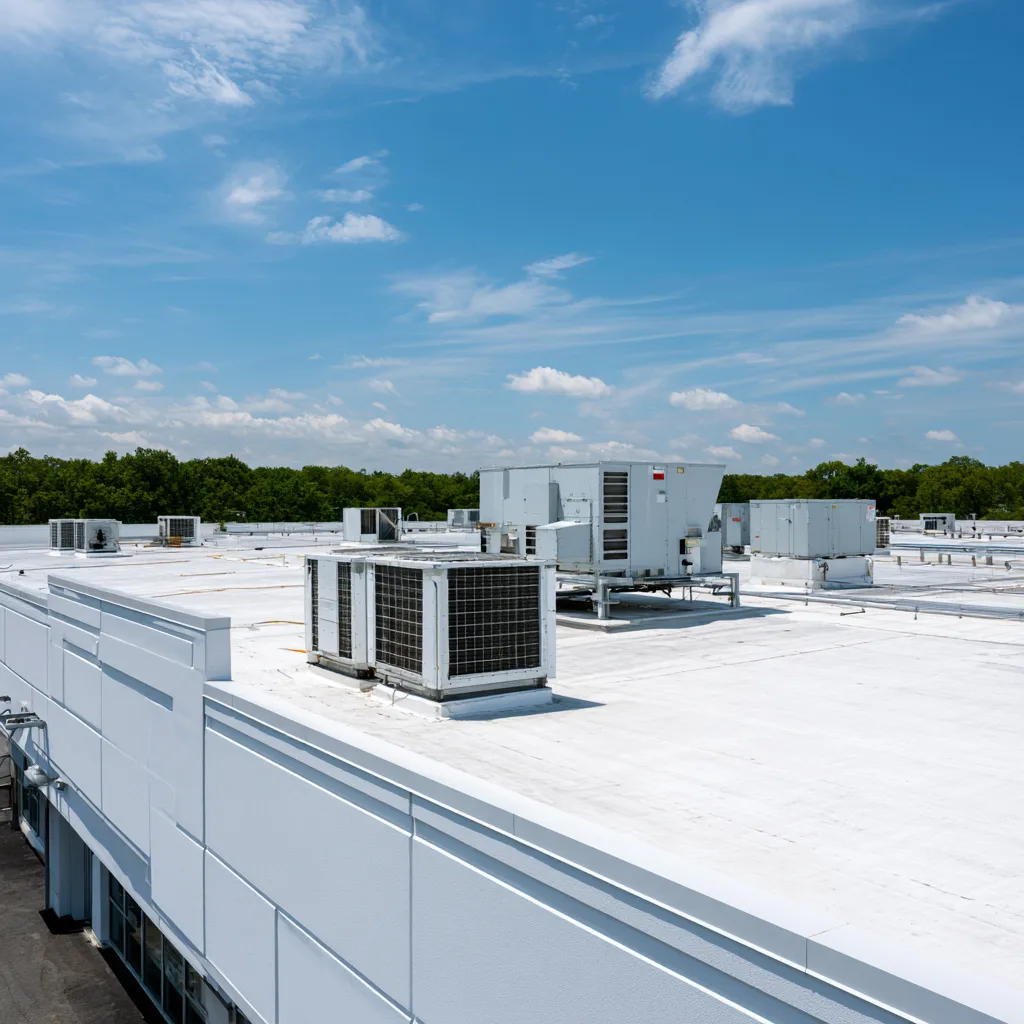
Share the building location, affected space and roof history if known. Request an inspection.
Call (913) 286-1886