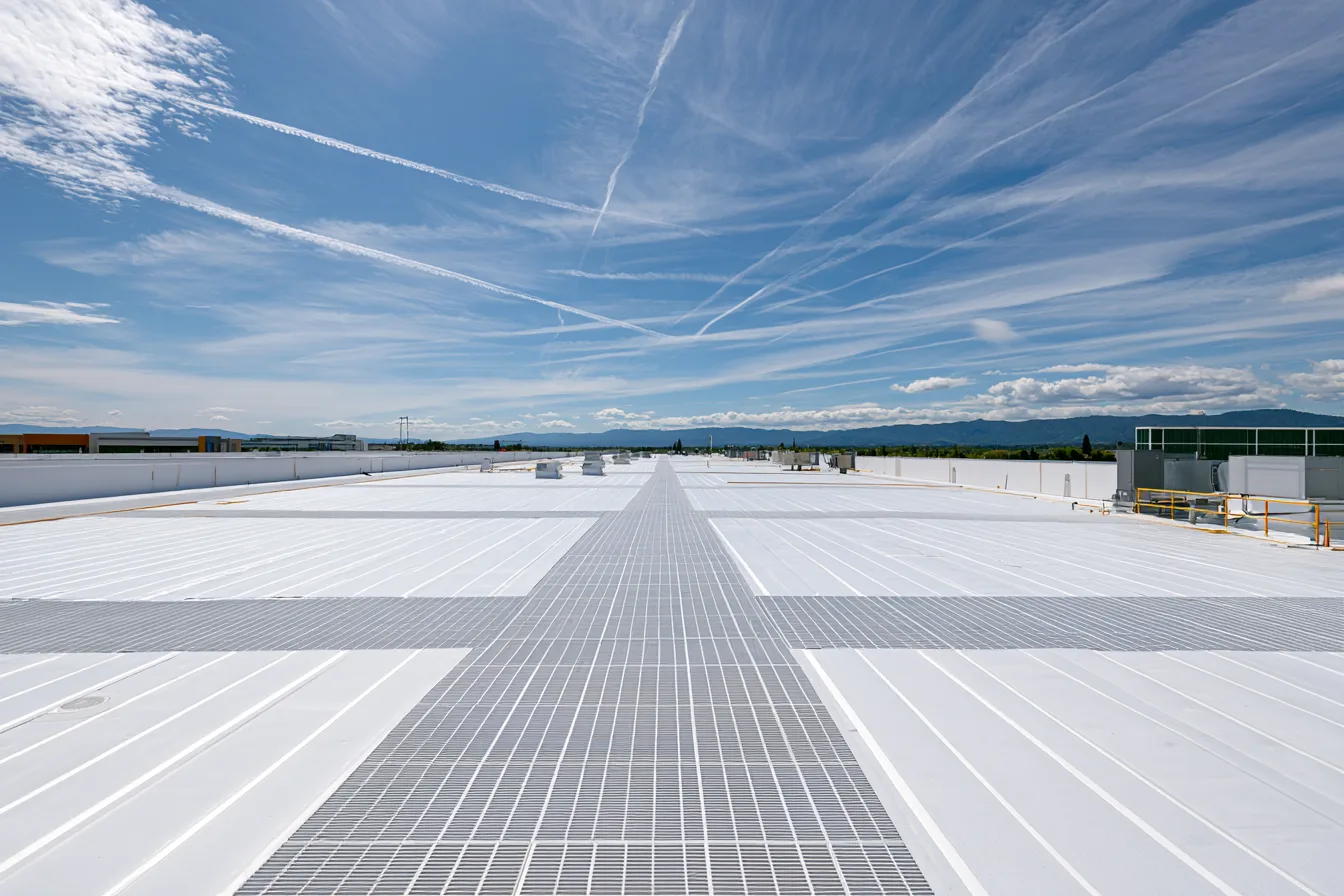
A commercial roof needs a reliable route for runoff. When water stays on the roof, the next question is why the route is not working and what lies beneath it.
Low-slope roofs rely on roof shape, drains, scuppers and outlets to move water away. A blocked drain can interrupt that path, while a depressed area or an assembly problem can hold water even after the outlet is cleared.
Those conditions need different work. Debris removal restores an obstructed route. Correcting a low area can involve insulation, supporting layers or another building condition. A surface patch alone does not answer every drainage problem.
A Drain Problem Can Be an Assembly Problem
The membrane is the visible part of the roof, but its support and insulation matter too. Moisture trapped below it can extend beyond the place where a leak first appears inside.
That distinction is central to a restoration decision. A coating needs an eligible prepared surface and sound underlying condition. It cannot remove wet insulation or restore failed support by covering it.
At Leawood Roof Pros, commercial roofing help starts by connecting the leak or drainage concern with the actual system. TPO, EPDM and multi-layer roofs have different seam and repair methods.
Access, occupied spaces and rooftop equipment belong in the roof plan. A drain near a service route or an equipment curb requires coordination with the people using the building and the roof.
The work can then be compared on what it resolves: a defined repair, eligible restoration or a broader replacement. Maintaining an effective drainage route remains useful whichever option fits.